
20mm or 30mm worktops? How to choose the right thickness for your kitchen
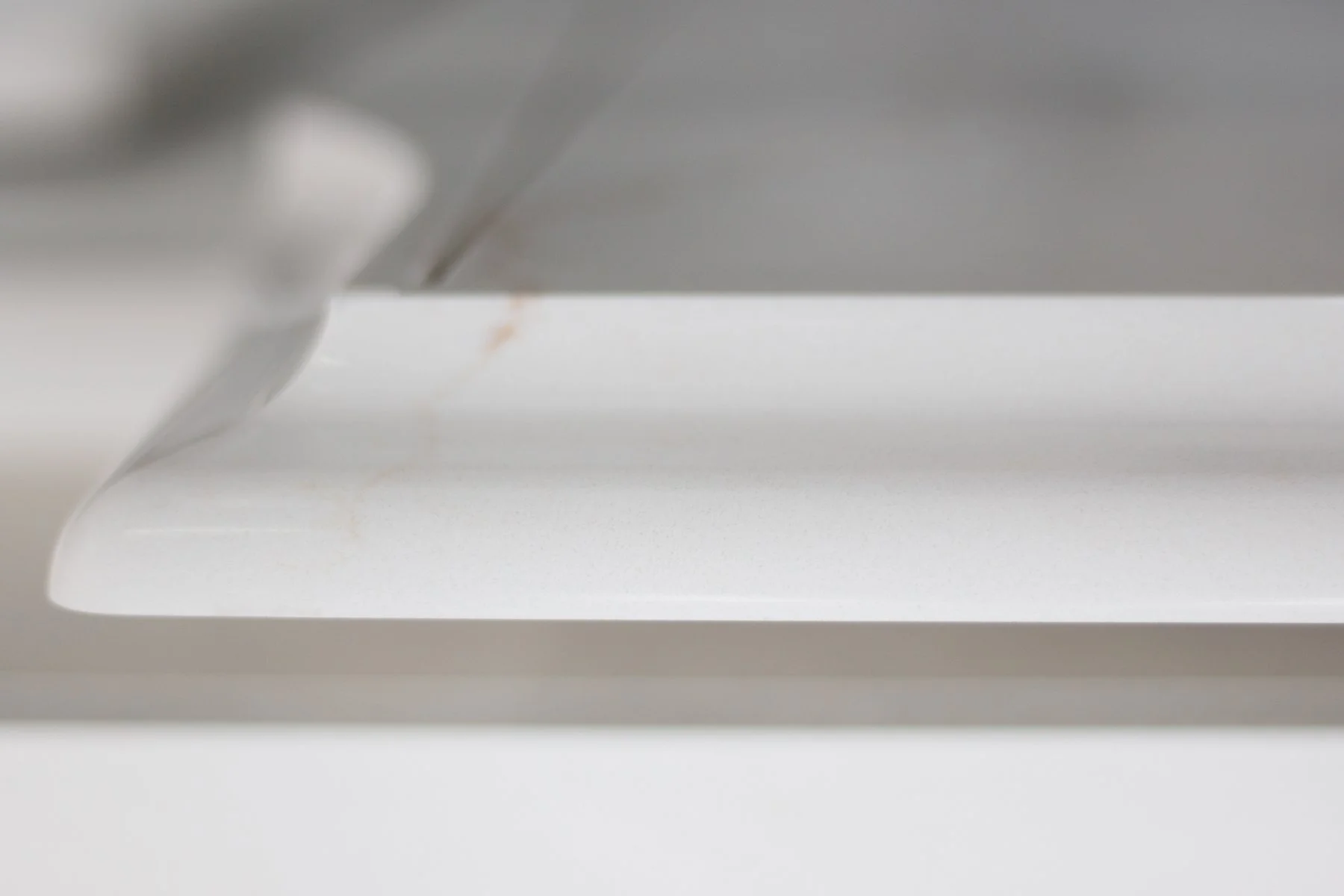
Choosing the right worktop thickness sounds like a small decision, but it can completely change how a kitchen feels once everything is in place. For homeowners comparing kitchen worktops in Lyndhurst, kitchen worktops in Frome, or planning a wider project across Hampshire, the New Forest or Somerset, it is often one of those details that feels much harder to judge than expected. At Bath Granite & Marble, we help customers explore stone surfaces from our Frome factory and showroom and our Lyndhurst showroom, where they can talk through materials, finishes and design details in a more practical way.
The reason this decision can feel surprisingly difficult is simple: people think they are choosing a number, when really they are choosing a mood.
They are asking questions like:
Will the kitchen feel light or heavy?
Contemporary or more classic?
Sharp and refined, or more solid and grounded?
That is why “20mm or 30mm?” is rarely just a technical question. It is a design question too.
It is not about which thickness is better
This is the first thing worth saying clearly: 20mm is not automatically better and 30mm is not automatically more premium.
A lot of people assume thicker must mean more impressive. It sounds logical, but in practice it is not that simple. The better choice is the one that works best with the rest of the kitchen.
That includes:
the cabinet style
the colour palette
the material you have chosen
the edge detail
the size of the room
how much visual weight the space already has
A kitchen can be beautifully designed on paper and still feel slightly off when it is finished. Thickness is often one of those quiet details that plays a bigger part than people expect.
What 20mm worktops usually feel like
A 20mm worktop often feels:
cleaner
lighter
more modern
more visually refined
This is why 20mm is often chosen for simpler, more contemporary kitchens. It tends to work well when the aim is to keep everything looking calm, neat and controlled.
If you are planning a modern kitchen with flat-fronted cabinetry, soft tones or minimal detailing, 20mm can help support that look without adding extra visual heaviness.
It can also suit materials that already have a lot going on in the pattern or colour. If the stone has strong movement, dramatic veining or bold contrast, a slimmer thickness can sometimes stop the whole scheme from feeling too busy.
For some homeowners looking at quartz worktops or porcelain worktops , this is exactly why 20mm appeals. Porcelain in particular is often chosen for its slim profile, clean finish and contemporary look.
What 30mm worktops usually feel like
A 30mm worktop often feels:
stronger
more substantial
more grounded
more obviously like a feature
That does not mean it is always better. It simply creates a different effect.
30mm can work beautifully in kitchens that need more presence. On larger islands, it can help the surface feel more anchored. In classic shaker kitchens or schemes with more traditional detailing, it can also feel very natural and in proportion with the rest of the room.
If 20mm often feels lighter and more streamlined, 30mm often feels more established. Some people like that straight away. It gives them a sense of solidity and reassurance.
This is why the right answer depends less on trends and more on balance.
The biggest mistake people make
The biggest mistake is choosing thickness in isolation.
It is easy to look at a sample and ask, “Do I prefer 20mm or 30mm?” But in real life, thickness never sits on its own. It is always working alongside the rest of the design.
That is why this decision can feel oddly difficult early on. A homeowner may not be struggling because they are indecisive. They may simply be trying to choose one detail before the wider scheme has fully taken shape.
And that is normal.
In fact, it is one of the most common things people get stuck on when planning stone worktops in Frome, stone worktops in Lyndhurst, or any kitchen renovation where they are trying to picture the final result before all the pieces are in place.
A simple way to make the decision easier
If you are stuck, try asking this instead:
Do I want the kitchen to feel lighter and more refined, or more grounded and substantial?
That question is often far more helpful than focusing on thickness alone.
As a rough guide:
If your kitchen already has a lot of visual detail like framed doors, bold colours, strong handles, patterned flooring or expressive stone- 20mm can help keep things feeling balanced.
If your kitchen is simpler and you want the worktop to bring more weight or presence to the room, 30mm can often help do that.
Neither answer is more luxurious by default. It is about what the room needs.
Material matters too
Thickness is only one part of the decision. Material matters just as much.
At Bath Granite & Marble, we work with granite, marble, quartz, quartzite, porcelain and sintered stone, helping customers choose surfaces that suit the design of the room and the way the space will be used every day. From our Frome factory and showrooms in Frome and Lyndhurst, we template, fabricate and install stone surfaces for homes, trade projects and businesses.
Different materials can change how a certain thickness feels. For example, porcelain is often chosen for its crisp, controlled look and slim profile, while natural stones such as marble, granite or quartzite can bring more depth, movement and character. Quartzite, in particular, is often chosen by people who want the beauty of a natural surface with strong everyday performance.
So if you are trying to decide between granite worktops in Lyndhurst, quartz worktops in Frome, or porcelain worktops in the New Forest, it helps to think about thickness and material together, not separately.
Why this matters more than people think
Worktop thickness is one of those details that many people only notice properly once the kitchen is installed.
That is why it is worth slowing down and thinking it through.
A good choice here will not scream for attention. It will simply make the whole kitchen feel more resolved. More intentional. More like everything belongs together.
And that is usually what people are responding to when they say a kitchen looks “right.”
Choosing kitchen worktops in Lyndhurst or Frome
If you are planning a kitchen and feel stuck between 20mm and 30mm, you are not overthinking it. You are trying to make a decision that quietly affects the whole room.
For customers looking at kitchen worktops in Lyndhurst, our Lyndhurst showroom offers a calm place to explore materials closer to home, especially for homeowners across Hampshire and the New Forest. For customers visiting Frome, our Frome showroom and factory gives a broader view of materials and, where available, full slabs, as well as a closer look at how projects are fabricated.
Whether you are choosing quartz, granite, quartzite or porcelain worktops or planning a project,, the goal is not to choose the thickness that sounds most impressive. It is to choose the one that feels right in the space and works with the rest of the design.