
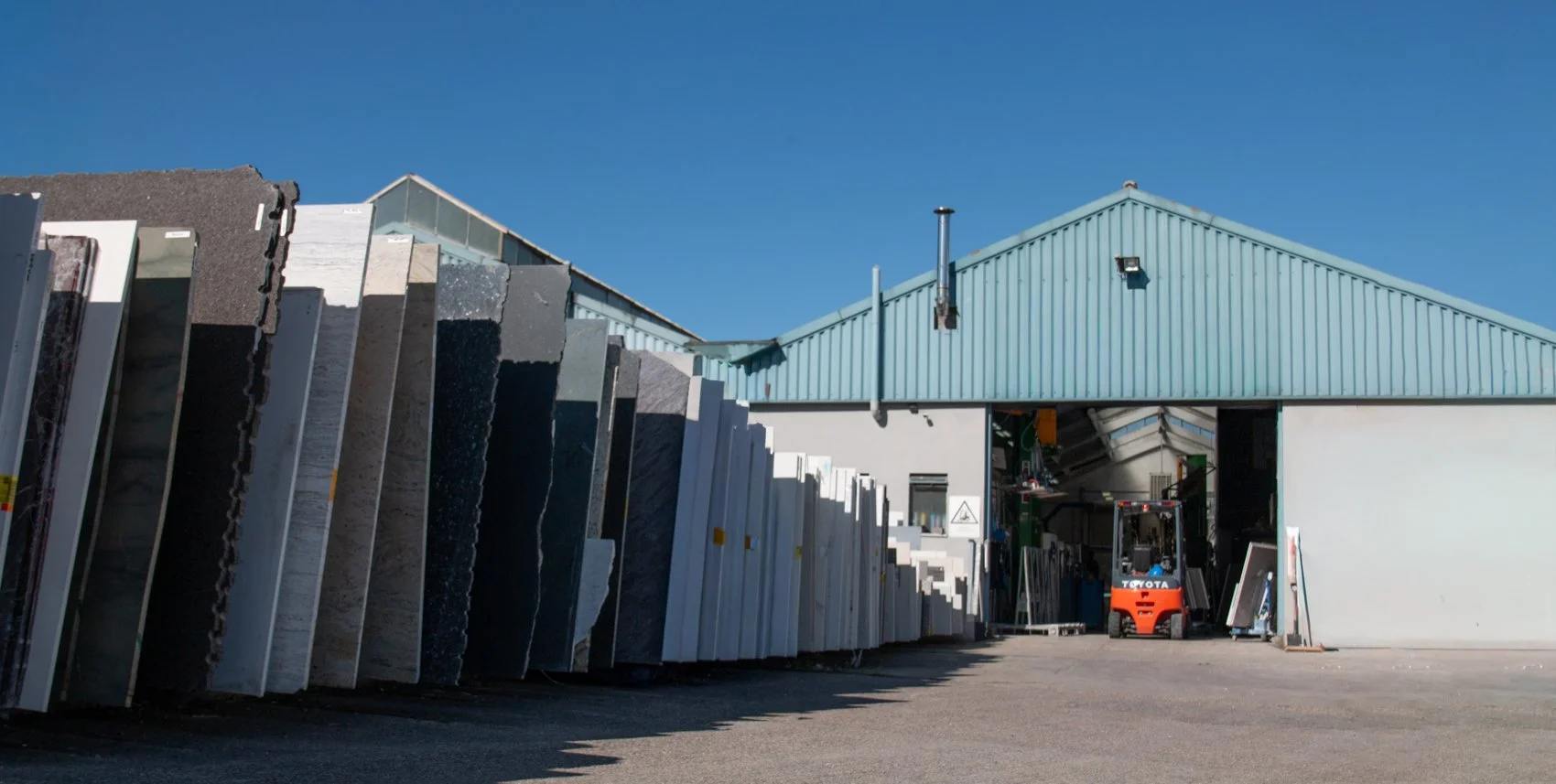
OUR FROME FACTORY AND YARD ARE WHERE MUCH OF THE PROCESS COMES TOGETHER
This is where materials are received, stored, checked, cut, shaped, finished and prepared before installation. Having our own factory means our team can stay close to the details that matter, from the way a template is interpreted to how the edges, cut-outs and final finish are handled.
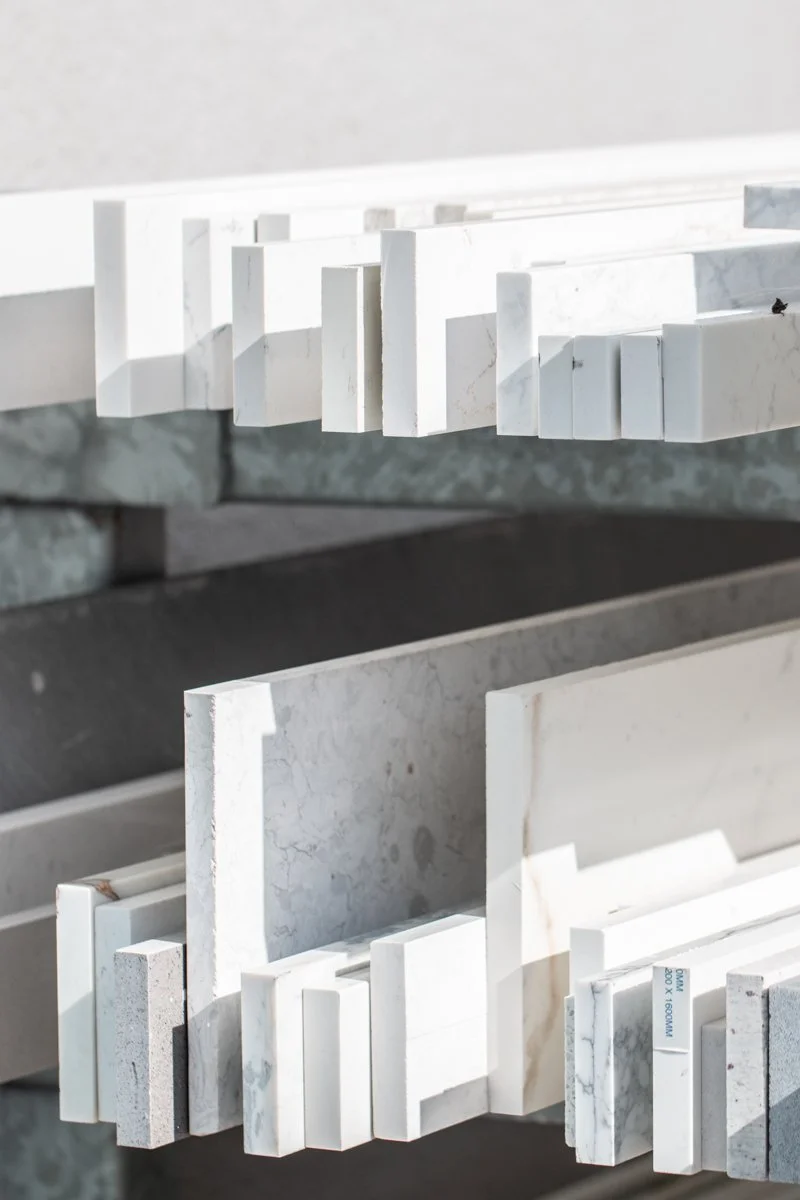
We hold a changing selection of natural stone, quartz, porcelain and sintered stone materials on site, depending on current stock and supplier availability. Not every material or colour is kept in the yard, but where larger pieces or slabs are available to view, this can be especially helpful for understanding natural variation, colour and movement.
Every project is different, so our role is to guide the material choice, explain what is suitable and make sure the fabrication process supports the finished result. The factory is not just where stone is cut. It is where many of the important decisions become real.
Cutting &
SHAPING
Once a project has been templated, the details are reviewed before the material is cut.
This stage is about more than following measurements. The template, material, layout and practical requirements all need to work together. Sink cut-outs, hob cut-outs, tap positions, overhangs, curves, shaped pieces and joins all affect how the finished surface will fit and feel in the room.
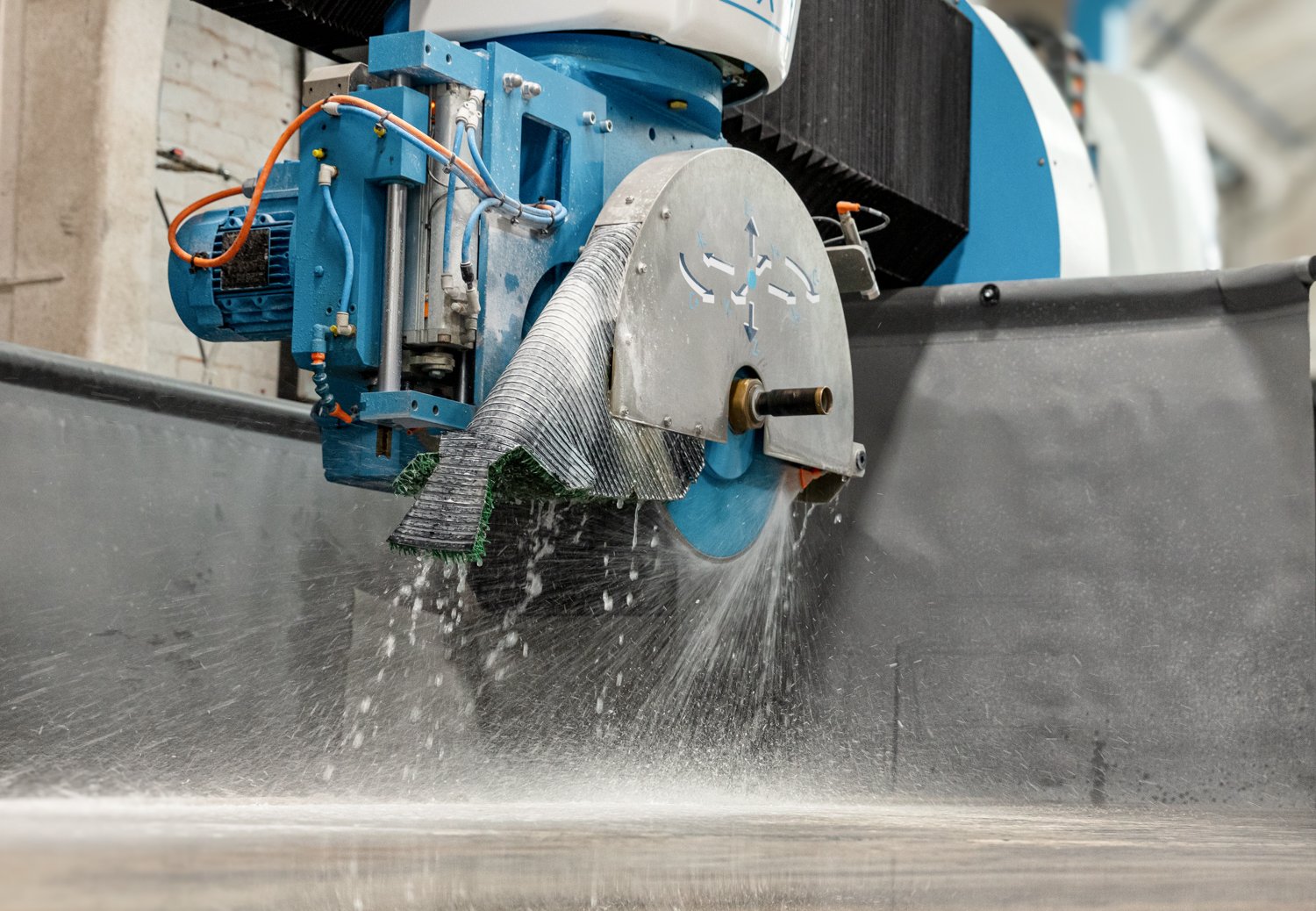
Our factory uses advanced cutting machinery to help achieve accuracy and consistency across each project. This is especially important when working with large worktops, islands, natural stone movement or more detailed shapes.
The machinery gives us precision, but the judgement of the team is still essential. Before cutting begins, the material and template are checked so the stone is used in the most considered way possible.
Finishing &
POLISHING
After cutting, each piece moves through the finishing stages.
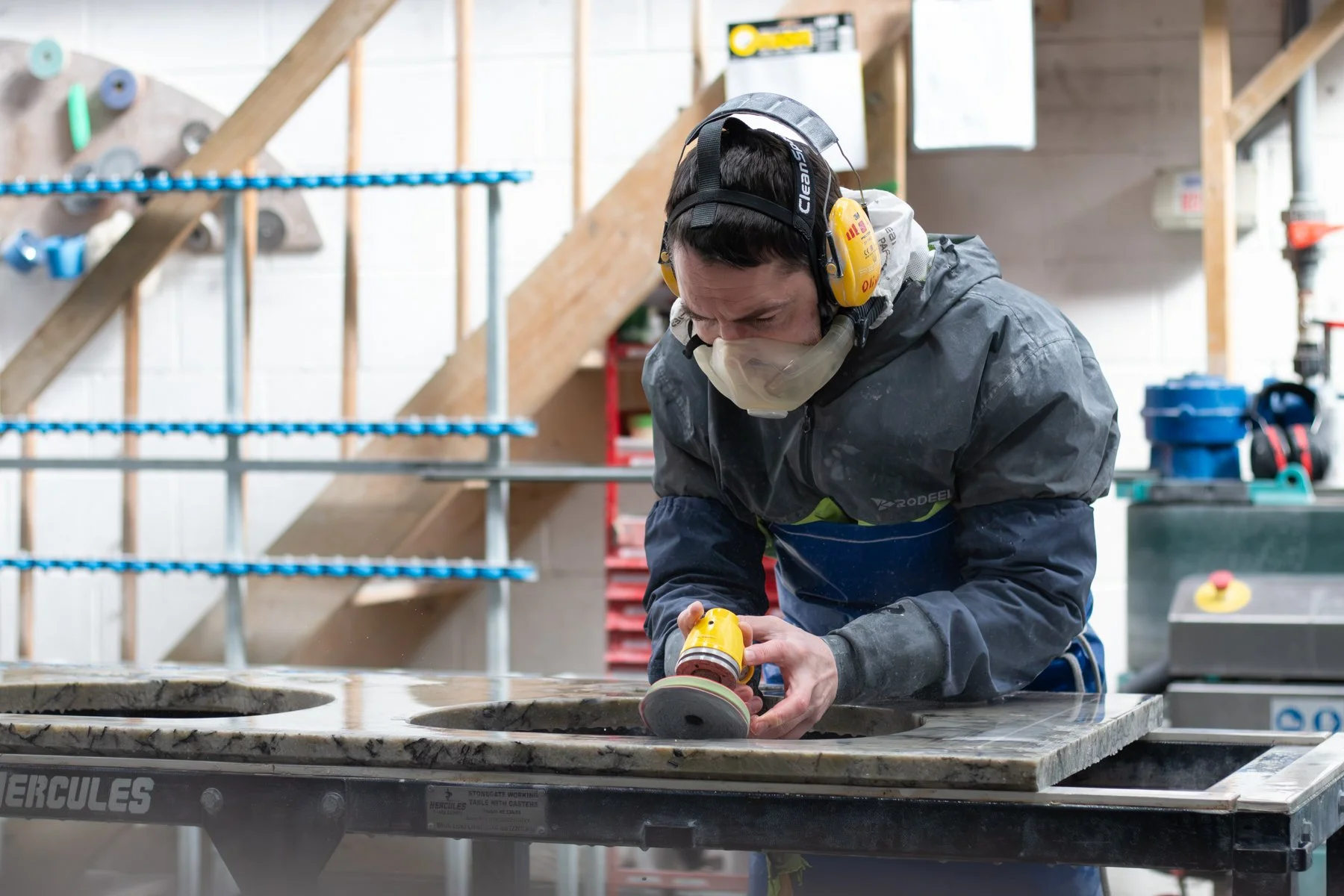
This is where the surface begins to feel complete. Edges are shaped and polished, cut-outs are refined, drainer grooves can be added and visible details are checked carefully before the stone is ready to leave the factory.
Some details are completed using specialist machinery, while others need careful hand finishing. This is particularly important around corners, edges, sink areas and bespoke details where the finish can affect both the look and feel of the worktop.
Good finishing is not always the first thing people notice, but it is one of the things that makes a surface feel properly made. It gives the stone its final touch, whether the project is simple and understated or more detailed.
Checked
at every stage
Quality is built into the process, not left until the end.
Each project is checked at key stages, from the template and material through to cutting, finishing and preparation for installation. These checks help make sure the finished pieces match the agreed details and are ready for the fitting team.
Before a worktop, vanity top, splashback or bespoke stone piece leaves the factory, we look at the important details again: measurements, cut-outs, edges, finish and any project-specific requirements.
This careful checking helps reduce issues on site and gives customers confidence that the work has been properly handled before installation day.
Safety &
SUSTAINABILITY
Stone fabrication needs to be handled responsibly.
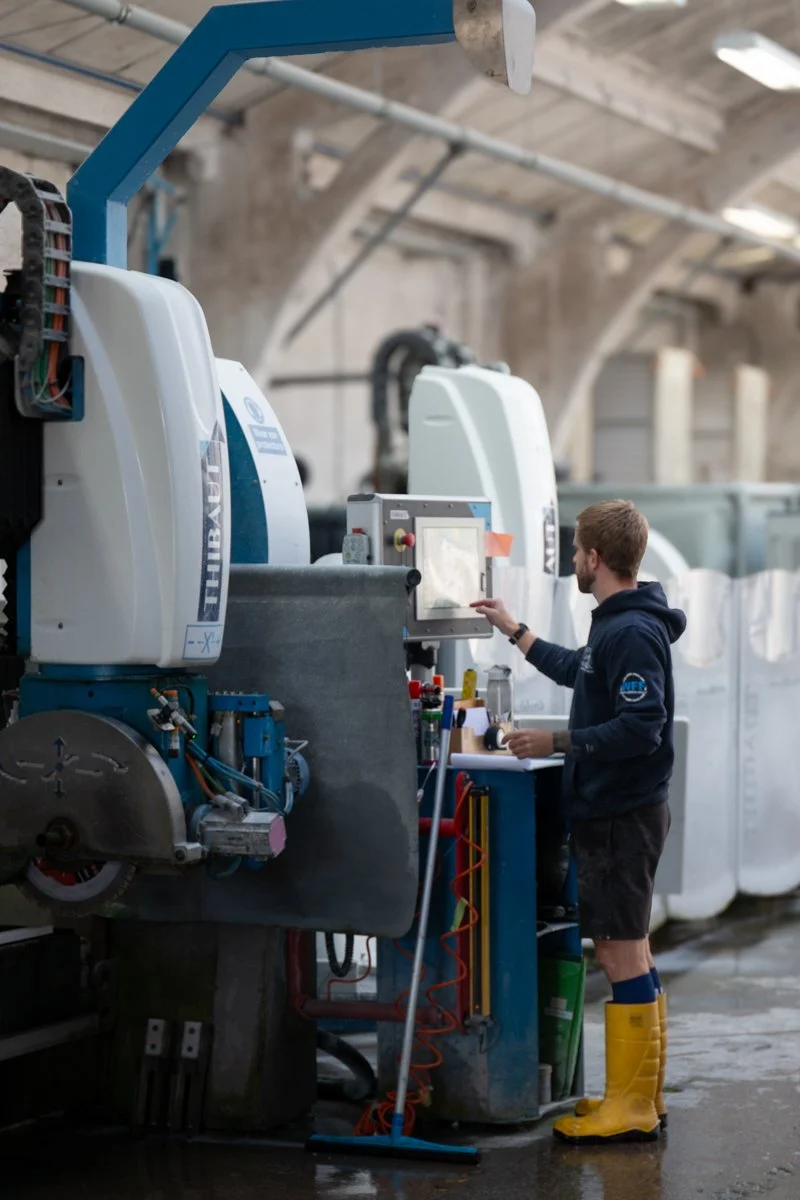
At our Frome factory, water is used during parts of the cutting, polishing and finishing process. This helps reduce airborne dust in the working environment and supports a safer, cleaner way of working for the team.
The water used in the fabrication process is filtered and reused where possible, helping us reduce waste while keeping the factory running efficiently.
We also invest in training, equipment and protective measures for our team, including suitable PPE and regular machinery maintenance. For us, a well-run factory is not only about the work it produces. It is also about the people doing the work and the environment they work in.
All of our procedures meet the standards set by the Worktop Fabrication Federation (WFF), ensuring our sustainability practices are not only effective but fully accredited by the industry’s leading body.